How Great Leaders Build Institutions That Thrive Beyond Them
Every organization built around a powerful leader eventually faces the same question: what happens when the judgment, authority, and energy holding it together are no longer there?
The Catalytic Leader presents a practical leadership framework for building institutions that are strong enough to answer that question, before it becomes urgent.

The Problem: Leadership Dependency
Leadership dependency arises when an organization’s performance, decision-making, and momentum remain excessively reliant on the judgment, authority, and presence of one leader.
As the organization grows, critical decisions, institutional knowledge, key relationships, and complex problems continue to flow toward the person at the center. The leader who once accelerated success gradually becomes its bottleneck and its single point of dependency.
The organization may appear successful while remaining structurally fragile. Teams escalate rather than decide. Progress slows when the leader is unavailable. Capability develops around the leader rather than throughout the institution.
This problem is especially visible in founder-led companies, where authority has often been concentrated from the beginning. But it can develop around any CEO, division head, managing partner, or influential executive who has become indispensable to the organization’s performance.
The defining question is:
Is the organization truly strong, or is it strong because its leader is there?
The Framework

The Catalytic Leader framework is built around a five-stage organizational maturity path that every leader-dependent organization travels: Builder, Driver, Architect, Steward, and Catalyst.
Each stage is supported by five structural conditions, the Catalytic Enablers: Vision Clarity, Authority Structure, Governance Depth, Performance Visibility, and Altitude Discipline.
Underlying both is Talent Composition, the multiplier that determines whether redistributed authority can succeed.
Two practical instruments make the framework actionable: a scored diagnostic that reveals where an organization stands today, and an operating model matrix that defines what is required to progress to the next stage.
[
About
]
Fred Mouawad
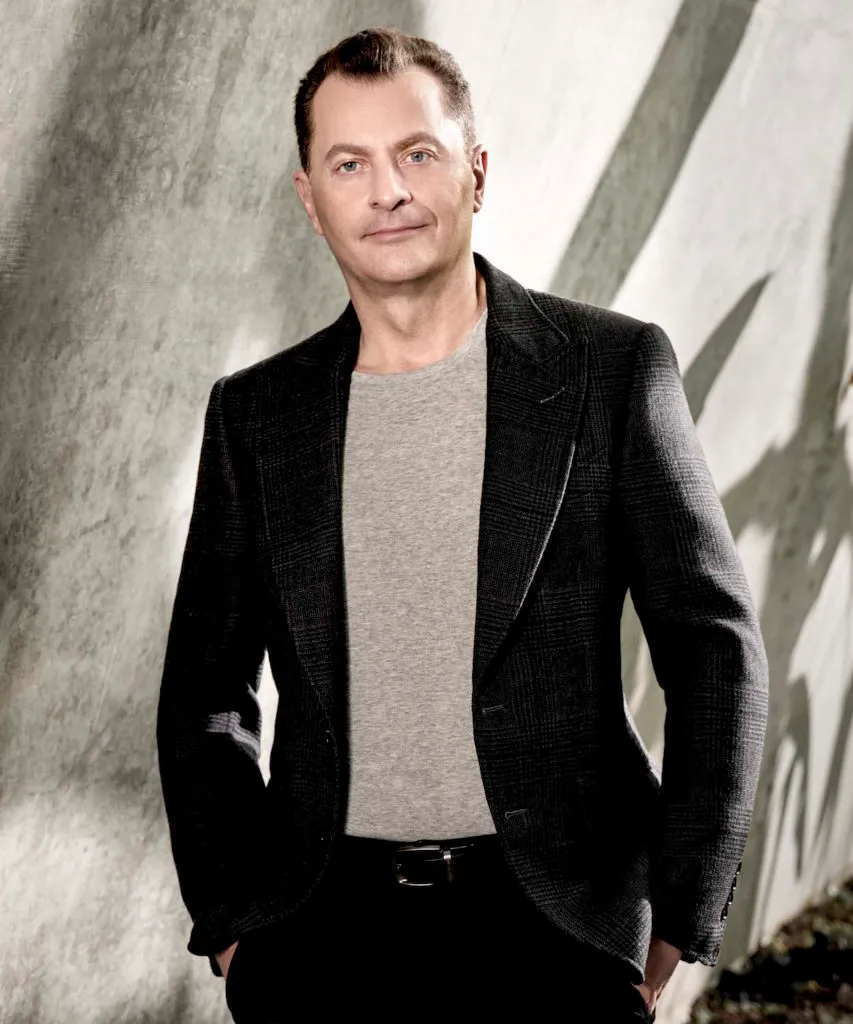
Fred Mouawad is the fourth-generation Co-Guardian of the House of Mouawad, a global family business founded in 1890 that has endured wars, economic downturns, and four generational transitions. He is also the Founder and Chairman of Synergia One Group, a portfolio of ventures spanning technology, manufacturing, media, and hospitality across eighteen countries. Among these is a coffee business he grew from a single Bangkok store into seven brands and more than 220 stores across multiple markets.
These two perspectives, inheriting a multigenerational institution and building new ones from the ground up, lie at the heart of The Catalytic Leader framework. They reflect the point at which a leader must stop being the center of every decision and become the architect of an institution that can thrive beyond them.
Fred holds an MBA from Harvard Business School (Class of 1995) and has served on the Harvard Business School Global Advisory Board since 2018. He completed the Stanford Executive Program in 2012 and co-founded and chaired the YPO Stanford GSB Executive Education Program for nine years. A YPO member since 2010, he served as Southeast Asia Regional Chair from 2017 to 2019. He is also a founding member of Family Business eXponential (FBX), a global network of family enterprises dedicated to governance, generational transition, and institutional design.
[
Sign up
]
Stay
Connected
Fred is currently writing a book based on The Catalytic Leader framework.
Sign up to receive updates on the project, new insights, free interactive tools, and book release news.